

 Blog
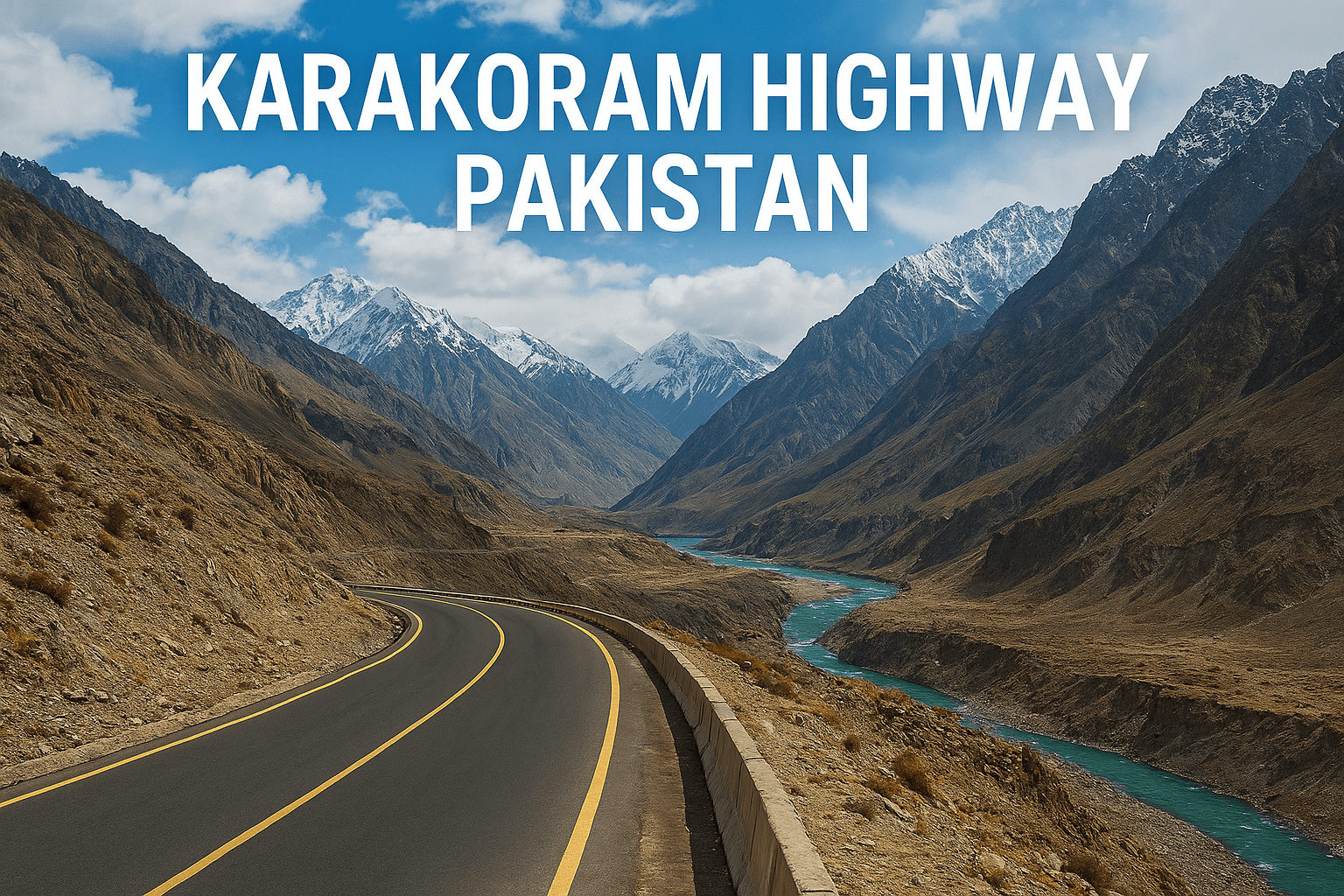
BlogThe amazing Karakoram Highway Pakistan is distant more than a road—it is a image of continuance, building brilliance, and breathtaking characteristic excellence. Frequently called the “Eighth World Wonder,” this highway cuts through the grand Karakoram Mountains, interfacing Pakistan with China through a few of the harshest and most sensational landscapes on earth.
From its tough scenes, towering crests, antiquated societies, and high-altitude passes to its profound chronicled importance, the Karakoram Highway (KKH) speaks to enterprise, legacy, and worldwide fascination.
Whether you’re a traveler, a analyst, a picture taker, or an enterprise partner, this direct unfurls everything approximately the world’s most elevated worldwide cleared road.
1. Introduction to the Karakoram Highway Pakistan
Built together by Pakistan and China, the Karakoram Highway Pakistan extends around 1,300 km from Hasan Abdal (Punjab) to Khunjerab Pass, where it meets the Chinese territory of Xinjiang. It is authoritatively a portion of the China–Pakistan Economic Corridor (CPEC) today
The KKH’s uniqueness lies in:
- Its height (coming to up to 4,714m at Khunjerab Pass)
- Its position over the Karakoram Mountain Range, one of the world’s most unsafe and marvelous ranges.
- Its part in tourism, geopolitics, and social exchange
- Its acknowledgment as an building marvel
The highway is not fair a transportation course but a life saver interfacing communities over mountain deserts, ice sheets, and stream gorges.
2. History: How the “Eighth World Wonder” Was Built
The development of the Karakoram Highway Pakistan started in 1959 and took nearly 20 a long time to total. Over 24,000 workers—both Pakistani and Chinese—risked their lives to carve this highway out of the world’s most dangerous rock formations.
Why is it called the “Eighth World Wonder”?
Because:
- It was built on sheer cliffs of unstable rocks
- Workers confronted avalanches, torrential slides, and extraordinary weather
- Construction required impacting through the Karakoram Mountains, a few of the world’s most noteworthy peaks
- More than 1,000 workers lost their lives
- It remains one of the most noteworthy human designing accomplishments at high altitude
3. Geography: The Karakoram Mountains & Their Mystique
The Karakoram Mountains, portion of the more prominent Himalayan locale, are domestic to:
- K2 (the world’s second-highest peak)
- Broad Peak
- Gasherbrum I & II
- Dozens of 7,000m+ peaks
The highway follows the powerful Indus River, passes through the Karakoram Desert, and skirts the edges of glaciers and snowfields.
Key Geographical Features
- Karakoram Mountain Range: Rugged, rocky, and home to the greatest concentration of high peaks on earth.
- Karakoram Desert: A cold high-altitude desert with dramatic landscapes.
- Karakoram Bindings: The geological collision zone between the Indian and Eurasian structural plates—visible along the KKH through uncovered rock layers.
This unmatched blend of geology, climate, and topography makes the KKH a living museum of Earth’s history.
4. Route Overview: What You See Along the KKH
The travel along the Karakoram Highway Pakistan is separated into unmistakable sections, each advertising one of a kind attractions.
4.1 Hasan Abdal to Besham
Green slopes, little towns, and access to Sikh legacy destinations such as Gurdwara Panja Sahib.
4.2 Besham to Chilas
One of the most exciting extends, featuring:
- Narrow mountain passes
- Indus River gorges
- Rock carvings dating back thousands of years
- https://whc.unesco.org (for UNESCO heritage rock carvings)
4.3 Chilas to Gilgit
Here, you witness the Nanga Parbat viewpoint, and the junction where the Hindu Kush, Himalayas, and Karakoram Mountains meet.
External Link:
4.4 Gilgit to Hunza Valley
This is the most beautiful portion. Well known spots include:
- Attabad Lake
- Passu Cones
- Rakaposhi Viewpoint
- Karimabad (Baltit and Altit Fort)
- https://www.atlasobscura.com
4.5 Hunza to Khunjerab Pass
The final stretch reaches the highest border crossing on Earth.
Here, you find:
- Khunjerab National Park
- Snow leopards (rare sightings)
- High-altitude pastures
- https://www.iucn.org
5. The Culture & People of the KKH
The highway passes through a mosaic of cultures including:
- Shina-speaking communities
- Wakhi people of Upper Hunza
- Burusho communities of Hunza
- Tibetan-influenced groups near the Chinese border
Hospitality is at the heart of life here. Travelers regularly portray the individuals of the Gilgit-Baltistan locale as a few of the most inviting in the world.
Cultural Highlights
- Traditional wooden houses
- Folklore and music
- Silk Route heritage
- Ancient trade customs
- https://unesdoc.unesco.org
6. Adventure Tourism on the Karakoram Highway Pakistan
The KKH is one of the world’s top adventure destinations. It offers:
6.1 Trekking & Hiking
Treks around Hunza, Hoper Glacier, Rakaposhi Base Camp, and Hispar Pass are popular.
6.2 Mountaineering
The Karakoram Mountain Range attracts climbers aiming for:
- K2
- Gasherbrum
- Broad Peak
- https://www.alpineclub.org.uk
6.3 Cycling the KKH
One of the world’s highest cycling routes.
6.4 Motorbike Adventures
International bikers call it the “ride of a lifetime.”
6.5 River Rafting
The raging Indus and Gilgit Rivers offer rafting and kayaking opportunities.
7. Wildlife & Natural Beauty
The region is home to rare wildlife, including:
- Snow Leopards
- Marcopolo Sheep
- Himalayan Ibex
- Golden Eagles
Unique natural elements along the route include:
- Attabad Lake’s turquoise waters
- Glacial streams
- Snow-capped peaks
- High-altitude deserts
- Blossoming orchards in spring
8. Economic & Strategic Importance
The KKH is vital for:
- Trade between China and Pakistan
- Regional tourism
- CPEC development
- Cross-border cultural exchange
It supports local economies by boosting tourism in Gilgit-Baltistan and providing access to remote valleys
9. Best Time to Visit the Karakoram Highway Pakistan
Ideal months:
- April to October
Winter travel:
The upper section near Khunjerab Pass may close due to heavy snowfall.
Recommended Season Highlights
- Spring: Flower blossoms
- Summer: Best for trekking
- Autumn: Golden leaves and clear skies
10. Travel Tips for Exploring the KKH
- Carry warm clothing (temperatures drop fast)
- Check road conditions before traveling
- Keep your passport if heading towards China
- Stay hydrated at high altitudes
- Respect local culture—modest clothing is advised
- Travel with a registered guide for remote areas
Conclusion
The Karakoram Highway Pakistan isn’t just a transportation course; it is a confirmation to human boldness and the breathtaking magnificence of nature. From the towering Karakoram Mountains and shining lakes to social lavishness and exciting experiences, each turn of this exceptional street tells a story.
Recognized as the “Eighth World Wonder,” the Karakoram Highway stands as one of the most awe-inspiring achievements in present day building and an exceptional travel for travelers worldwide.
Whether you’re drawn by history, mountains, culture, or immaculate experience, the KKH guarantees recollections that final a lifetime.
For reading more blogs like this visit mmtravelspk.com

